記
130 check points per animal
Every animal has a record from birth to delivery: pedigree, weight development, daily health status, feed, treatments. Kept for over 20 years — data on more than 6,000 head.
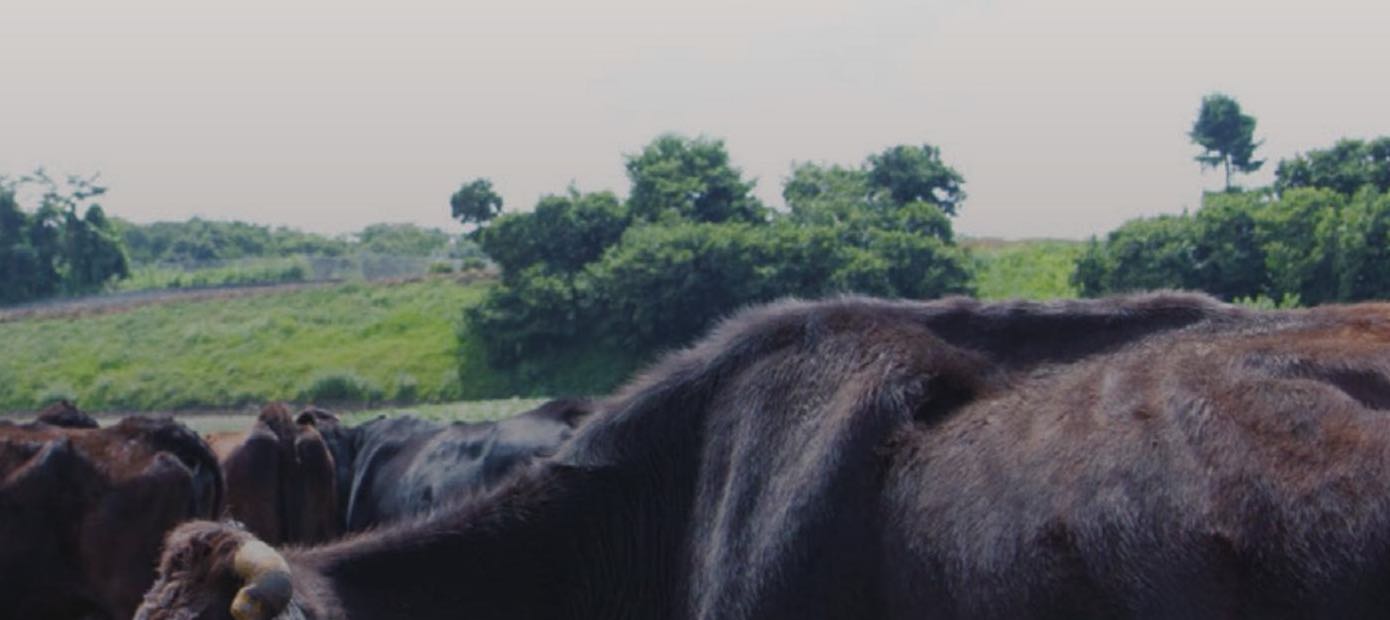
We do not buy our wagyu on the world market. It comes directly from two Japanese regions — Gunma and Oita.
Rather than pooling as many sources as possible, we work with a few long-standing partners. That keeps quality, bloodline and availability predictable over the years — and every animal traceable back to the farm.
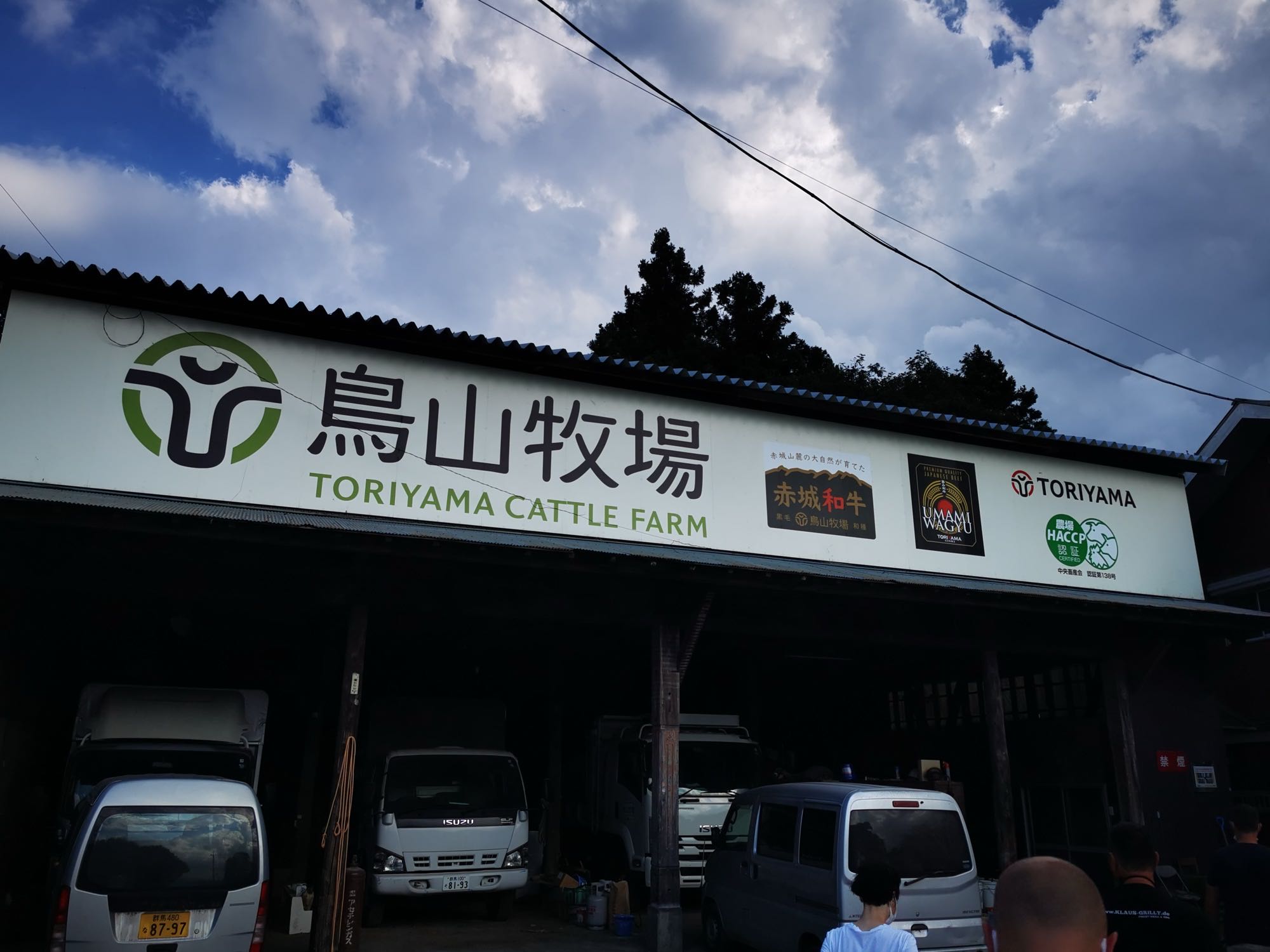
At the foot of Mount Akagi, some 150 km north of Tokyo, lies Toriyama Farm — clean air, pure water, a highland climate. About 1,300 head of Kuroge Wagyu live here, in stress-free barns separated by growth stage and kept clean 365 days a year.
Toriyama does not define wagyu by maximum marbling: “The degree of marbling is not proportional to taste.” What matters is the balance between lean meat full of gentle umami and a refined fat with sweet aroma and a long finish.
Every animal has a record from birth to delivery: pedigree, weight development, daily health status, feed, treatments. Kept for over 20 years — data on more than 6,000 head.
Toriyama was the first private company in Japan to install a device measuring monounsaturated fatty acids. Every animal is measured — and the reading feeds back into breeding and feeding.
The feed is Japanese: feed rice, edible rice that would otherwise go to waste, and miso. Manure becomes compost for neighbouring farms — whose rice straw returns as feed.
Oita Prefecture, in eastern Kyūshū, is the home of the Bungo breed, repeatedly named Japan's finest wagyu over more than a century. In the hundredth year of that history the new prefectural brand “Oita Wagyu” was created — hence the line in the mark: Blessings of a Century.
Only meat graded quality 4 or above may carry this brand — and only from farms that breed for flavour rather than volume.
Image film by Oita Prefecture. Playing the video transmits data to YouTube.
Wagyu refers to four cattle breeds native to Japan and to crosses between them. Only meat from animals born and raised in Japan, however, reaches the market as wagyu from Japan. That is precisely what we supply: Kuroge Wagyu born and raised in Japan.
Kuroge Wagyu accounts for by far the largest share of Japanese wagyu production and is known for its fine marbling and its aroma. On heating, the characteristically sweet, full scent of wagyu comes through. The fat is also high in unsaturated fatty acids — hence the light, clean finish.
Four stages, refrigerated throughout and fully documented.
Farms in Oita and Gunma. Every animal with an individual ID and pedigree record.
Primal cutting and EU certification at an approved Japanese plant.
An unbroken cold chain from Japan to our plant in Germany.
Portioning by Japanese technique in our own plant — with lot documentation.
Full, unlimited food-law approval granted by the Regional Council of Darmstadt — for cutting beef and as a large-scale kitchen for year-round processing. With an unbroken cold chain, temperature logging, regular laboratory testing and lot-number traceability.
We disclose bloodline, farm and lot for every delivery. Just ask.
Send enquiry